Over 3.4 crore suspicious mobile numbers disconnected, 59 lakh bank accounts frozen as part of anti-fraud drive
India has lost more than Rs 52,000 crore to cyber fraud over the last five years, officials have revealed. Out of approximately 60 lakh cyber fraud complaints received, more than 3,000 cases have been resolved and six cyber fraud setups have been busted.
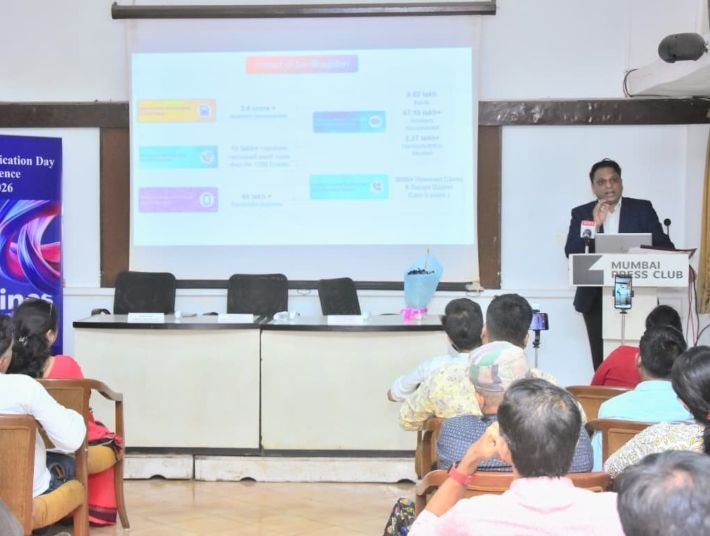
On the occasion of World Telecommunication and Information Society Day (May 17), the Department of Telecommunications (DoT), Mumbai Licensed Service Area (LSA), highlighted key initiatives aimed at strengthening telecom resilience, enhancing cyber security, and promoting digital inclusion across India.
Addressing a press conference here on Friday, Ajay Kamal, Deputy Director General (Administration), Mumbai LSA, said the Telecommunications Act, 2023, along with the Telecommunications (Telecom Cyber Security) Rules, 2024, has significantly strengthened India’s digital governance and legal framework.
He noted that Artificial Intelligence (AI)-driven systems are increasingly being deployed for governance, fraud detection, and network security. Kamal further stated that the Telecommunications (Right of Way) Rules, 2024, implemented in Maharashtra from January 1, 2025, have streamlined telecom infrastructure deployment through a centralized portal for mobile towers and optical fibre installations.
According to Kamal, the Department currently maintains 99.999 percent telecom network uptime through system redundancy and regular security audits.
Officials highlighted the proposed Biometric Identity Verification System (BIVS) Draft Rules, 2025, which mandate biometric verification for telecom users to prevent impersonation and identity fraud.
Under the proposed framework, impersonation-related offences may attract penalties of up to three years imprisonment and fines of up to Rs 50 lakh.
Ashish Pathak, Additional Director General (Telecom), Mumbai LSA, speaking on the theme ‘Digital Lifeline: Strengthening Resilience’ said, telecommunications has become an essential component of modern life.
“The Government of Maharashtra, in coordination with telecom authorities, is actively implementing measures to curb cybercrime and strengthen digital safety,” he said.
Officials said India had lost more than Rs 52,000 crore to cyber fraud during the last five years. Out of some 60 lakh cyber fraud complaints received, more than 3,000 cases have been resolved and six cyber fraud setups have been busted, they said.
Citizens were urged to immediately report incidents of financial fraud through the national cybercrime helpline number 1930, preferably within 24 hours of the incident.
Among the major citizen-centric initiatives, DoT highlighted the Sanchar Saathi mobile application, which has recorded over 1.7 crore downloads and more than 23 crore portal visits.
The platform enables users to:
* Block lost or stolen mobile phones
* Report telecom-related fraud
* Track suspicious activity
* Officials said nearly 10 lakh handsets worth more than Rs 1,250 crore have been blocked or traced through the initiative.
DoT officials stated that the Department has:
* Disconnected 3.4 crore suspicious mobile numbers
* Blocked 2.27 lakh fraudulent IMEI-linked handsets
* Deactivated over 16.97 lakh WhatsApp accounts linked to cyber fraud
* Additionally, more than 10 lakh handsets worth over Rs 1,250 crore have reportedly been recovered.
The Department also highlighted the role of the Digital Intelligence Platform, which includes the Mobile Number Revocation List (MNRL).
The platform shares data related to disconnected numbers with over 1,200 organizations, including:
Banks
Financial institutions
UPI service providers
Law enforcement agencies
Officials stated that this coordinated effort has led to the freezing of more than 59 lakh suspicious bank accounts, preventing losses exceeding Rs 1,000 crore.
The Financial Fraud Risk Indicator (FRI) system has also enabled banks and financial institutions to prevent fraud in real time.
Pathak also informed that engineering college students have been empanelled to spread awareness regarding mobile towers and radiation concerns.
He stated that new telecom towers are increasingly equipped with solar panels to encourage sustainable and energy-efficient telecom infrastructure.
Highlighting the Department’s push towards innovation and skill development, Pathak said more than 100 5G laboratories have been introduced in engineering colleges across the country.
In addition, over 2,600 rural locations have been connected with new telecom towers to improve connectivity in previously uncovered regions.
Kamal urged citizens to adopt ‘zero trust’ digital practices and verify all digital communications and information before responding.
He reiterated that victims of cyber fraud should immediately contact the national helpline number 1930 for assistance.