An ode to the cradle of humankind

Diplomat Abhay K.’s latest collection of poems explores Africa in all its diversity

GN Bureau | May 14, 2026


#Literature   #Culture  
(Photo: Courtesy https://commons.wikimedia.org/wiki/File:Africa_nature_16.jpg)

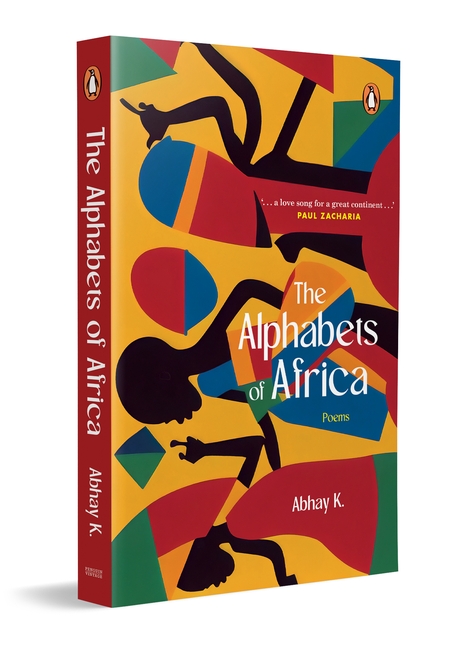
The Alphabets of Africa: Poems

By Abhay K.
Vintage Classics, 280 pages, ₹499.00
 
Abhay K. is a poet with a difference. In recent years, he has given us a number of translations (for example, Kalidasa’s Meghaduta and Ritusamhara), poetry collections, edited works, and more. His latest offering, The Alphabets of Africa, is “a cultural and literary exploration of the continent in verse.”
 
Reminiscent of his The Alphabets of Latin America (2020) in conception, this collection is an ode to a continent that cradled humankind and continues to define its story. Having often travelled across it during his diplomatic assignments, the poet recreates in exquisite short poems the myriad feelings of being in Africa. Through time, space, and memory, these poems map Africa, celebrating its vast and vibrant tapestry. From the splendour of its ancient civilizations to the pulse of contemporary African cities, this book summons the continent in all its depth and glory.
 
For most of us, Africa calls to mind many images and many stereotypes, but these alphabetically arranged 180 poems nudge us to see the continent afresh. The structure itself is a marvel of compression; Abhay employs a ‘monocle’ poetic style—brief, precise, and illuminating. In a unique stylistic choice, many of these poems are written in the first person. Rather than writing *about* his subjects, Abhay allows the icons and elements to speak for themselves. We hear from Shaka Zulu, narrating his rise from a mocked child to a brilliant military tactician, and even from the Coffee bean itself, describing its journey from the Ethiopian highlands to the cafes of the world.
 
“Africa is a continent with a rhythm of its own,” the poet notes. “Its diversity is immense. To know more about ourselves, we must learn more about Africa.” This sentiment is the heartbeat of the collection. Abhay consciously uses his verse as a rebuttal to the "Dark Continent" myth famously perpetuated by Joseph Conrad. In poems like “Light of Africa”, he uses an incantatory rhythm to flip the script, framing the land not as a place of shadows, but as the source of human enlightenment.
 
Abhay is as inspired by the sights, sounds, and smells of Africa as he is by its literary torchbearers—from Chinua Achebe and Wole Soyinka to Chimamanda Ngozi Adichie and other contemporary practitioners. In fact, the opening poem is on Abdulrazak Gurnah (I began writing/ out of homesickness…). There are poems on other great icons too—Nelson Mandela (I rose/ with the resolve/ to fight apartheid…), Desmond Tutu, and the legendary wealth of Mansa Musa.
 
Beyond the people, the collection performs a vital historical reclamation. It highlights achievements often overlooked by Western textbooks, such as the Narmer Palette and the peace treaty of Ramses II. By doing so, the book transcends being a mere travelogue; it becomes what critics have called a "biological pilgrimage." It reminds the reader that since *Homo sapiens* evolved in Africa, we all carry its genetic legacy within us.
 
The collection takes the reader on a safari through not only the continent’s history and geography, culture and politics, but also offers an opportunity to pause and wonder about the story of our race over the last 2,00,000 years. It is, quite simply, a homecoming in verse.

Comments


Other News

India should deepen energy partnerships with Africa

The vulnerability of Strait of Hormuz continues to influence energy politics globally. India is highly dependent on imported crude oil as a significant portion of its oil imports still come from the Gulf ultimately making such disruptions particularly consequential and has immediate economic ramifications

The rupee stumbles: Can India Inc. chip in?

Every time the Indian rupee weakens to a new record low, the conversation follows a familiar script. The RBI intervenes. Economists debate the current account deficit. The government appeals to citizens to cut consumption. And within a few news cycles, attention moves on, until the next record low arrives.

Provisional answer key for civil (prelim) to be released soon after exams

For the first time, the Union Public Service Commission will release the Provisional Answer Key for the Civil Services (Preliminary) Examination 2026, soon after the exam, to enhance transparency and uphold the highest standards of conduct of examination.   Terming it as “a

Thinking about thinking: How the mind (or AI) works

Tom Griffiths is one of those scientists working at the cutting edge of cognitive science and AI. He is a professor of psychology and computer science at Princeton University, and directs the Computational Cognitive Science Lab and the Princeton Laboratory for AI. His first book for general readership &lsq

`M`rashtra muni. corpns face major governance, citizen participation gaps`

A statewide consultation organised by Praja Foundation has highlighted major governance, financial, and citizen participation gaps across Maharashtra’s Municipal Corporations, calling for urgent reforms to strengthen urban local bodies in line with the 74th Constitutional Amendment Act. &nb

When children stay healthy, they stay in school

Learning Begins with Wellbeing The future of education is often discussed through the lens of classrooms, technology, and learning outcomes. Yet one of the most critical drivers of a child’s ability to learn remains surprisingly overlooked: their health.  


Archives

Current Issue

Opinion

Facebook Twitter Google Plus Linkedin Subscribe Newsletter

Twitter